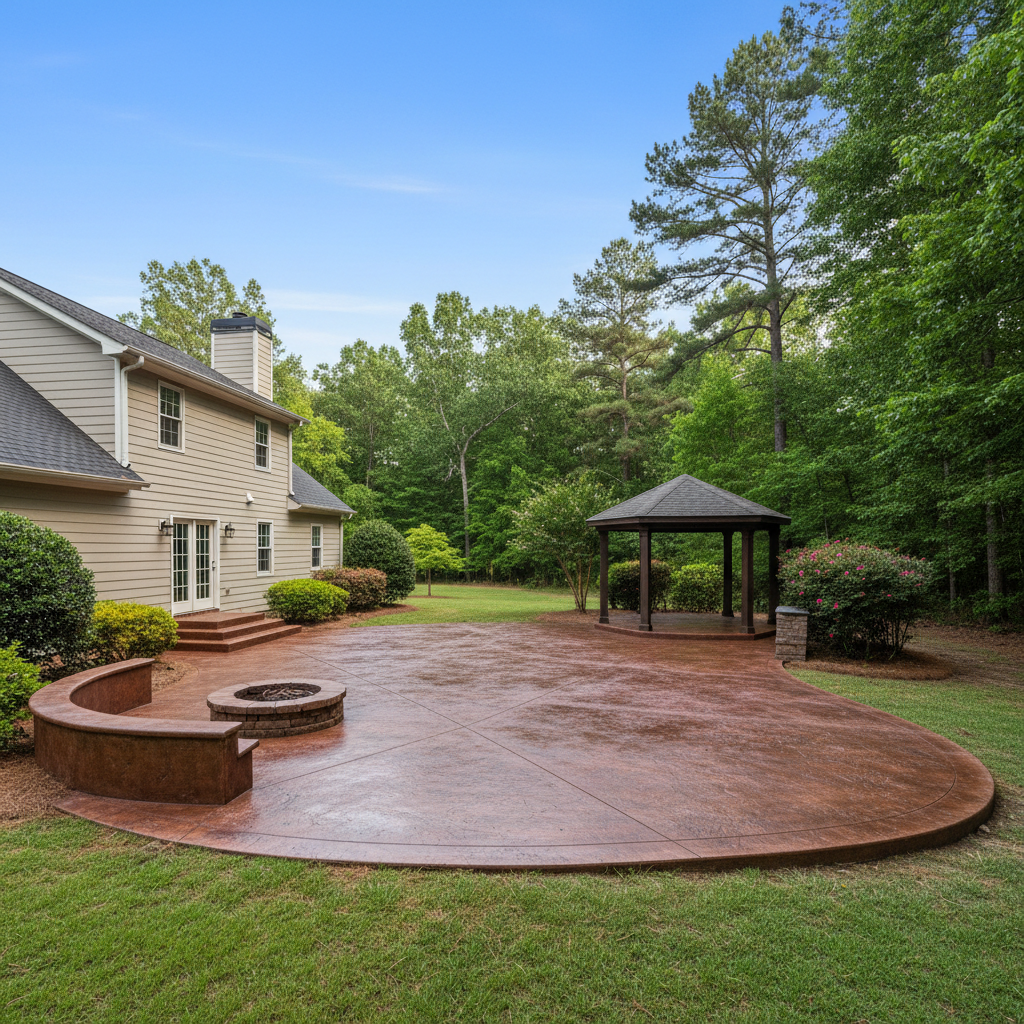
Alright, let's talk about concrete staining. Maybe you've got a concrete slab — could be a patio, a garage floor, or even an indoor spot — and you're just plain tired of that boring gray look. Staining can really change things up, giving it a rich, custom feel that paint just can't touch. But before you jump in, there are some important things you, as a homeowner here in Jesup, need to think about. This helps make sure your project goes smoothly and actually lasts.
Timing Your Project: Don't Rush It
Timing is everything, honestly, especially here in Jesup with our wild weather. You really don't want to start a staining project when it's too hot, too cold, or too wet. Our hot, humid summers, which often bring heavy rainfall, can make things pretty tricky. The ideal weather for staining means moderate temperatures, usually somewhere between 50-80°F, and lower humidity. That means spring and fall are often your best bets around here. You'll definitely want to avoid those scorching July and August days when temperatures can easily hit the 90s, and the concrete itself holds onto a lot of heat. If it's too hot, the stain can dry way too fast, and that messes with how it penetrates and reacts with the concrete. And forget about staining if there's rain in the forecast within 24 hours of when you plan to seal it.
If you're staining new concrete, you've got to let it cure completely first. That usually takes about 28 days. For existing concrete, you still need a few dry days leading up to the project, and then a few more after for the stain and sealer to dry and cure properly. Generally speaking, a typical staining project can take anywhere from 3 to 4 days, depending on how big and complex it is. Each major step — prep, application, sealing — usually takes about a day.
What to Expect During the Process
Staining concrete isn't like painting a wall; it's a multi-step process that calls for patience and careful work. Here's a general idea of what happens:
- Surface Prep is Key: This is probably the most important step. Your contractor will thoroughly clean the concrete to get rid of any dirt, grease, oil, or old sealers. If there are existing sealers, they'll need to be stripped off. Any cracks or flaws will need to be repaired and filled to make sure the finish is even. For new concrete, it needs to be cured and free of things like drywall mud if it's an indoor project during construction.
- Applying the Stain: Once the surface is clean and dry, the stain is applied. This can be done with a sprayer, brush, or roller, depending on the type of stain and the look you're going for. Acid-based stains react chemically with the concrete, creating unique, translucent, and permanent colors that won't chip or peel. Water-based stains, on the other hand, deposit pigments into the concrete's pores. Often, multiple coats are applied to get just the right color depth.
- Neutralizing (for Acid Stains): If an acid stain is used, a neutralizing solution is applied to stop the chemical reaction. Then it's rinsed off. This step is important before sealing.
- Sealing for Protection: After the stain has dried completely (this can take 24 hours or even more), a protective sealer is applied. This sealer is really important, especially here in Jesup, because it protects against moisture getting in, UV damage from our intense sun, and general wear and tear. It's what makes your stained concrete last.
- Curing Time: You can usually walk on newly sealed concrete after about 24 hours, but it needs roughly 7-10 days for full curing. For heavy use, like parking a car, you might need to wait a couple of weeks.
How to Prepare Your Home for the Project
Before the crew from Top Notch Concrete Solutions even shows up, there are a few things you can do to get ready:
- Clear the Area: Move all furniture, potted plants, grills, and anything else off the concrete surface. This also includes anything nearby that could get overspray, like delicate plants or outdoor decorations.
- Address Drainage: Make sure your gutters and downspouts are working correctly and sending water away from the area. Good drainage is key to concrete lasting a long time, especially with our heavy rains.
- Protect Nearby Surfaces: If the concrete is near walls, landscaping, or other surfaces you don't want stained, you'll need to cover them. Your contractor will do this too, but a little extra protection never hurts.
- Communicate: Talk to your contractor about access to water and electricity. Let them know if you have any specific concerns about your property or pets.
Questions to Ask Before Signing a Contract
You want to make sure you're hiring the right team for the job, right? Don't be shy about asking questions. Here's what I'd want to know: