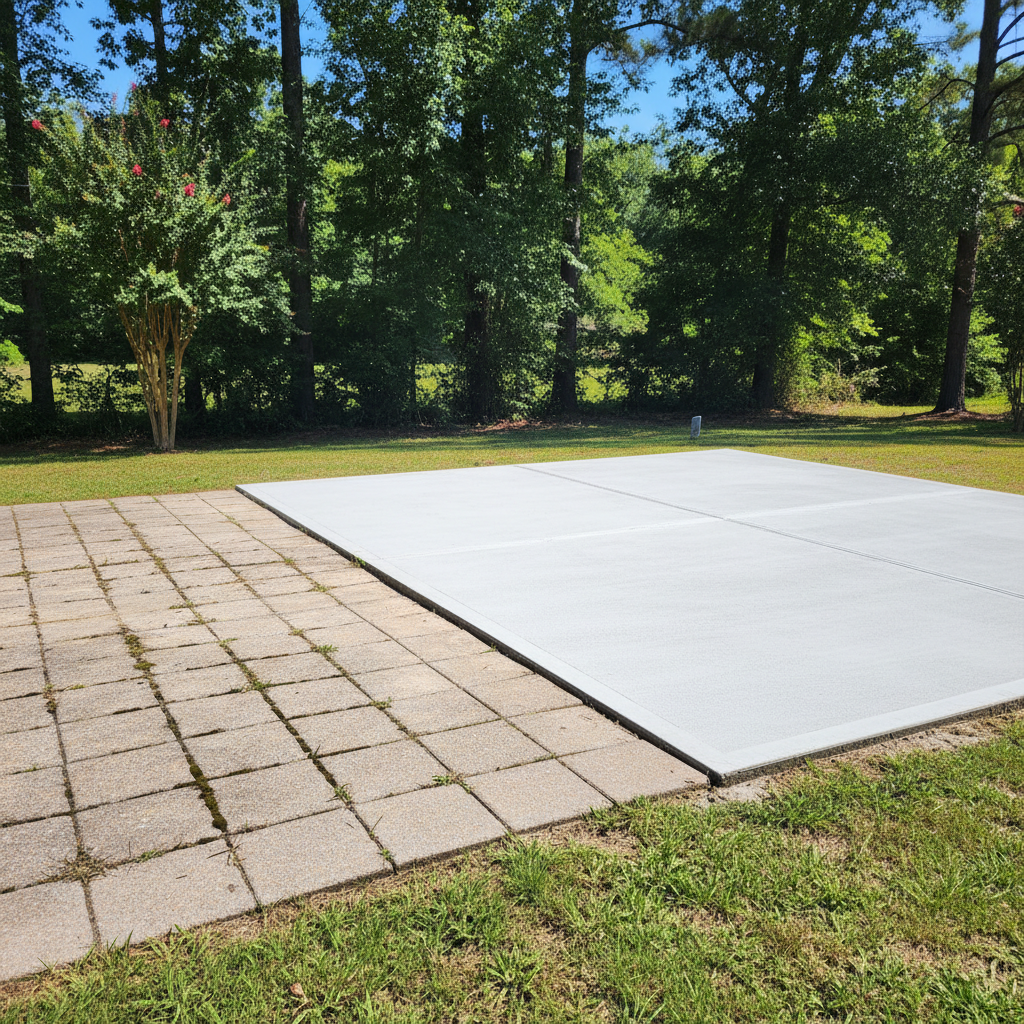
Alright, let's talk patios. You're probably looking to upgrade your backyard, right? Maybe you want a nice spot for the grill or some outdoor furniture. Usually, two main options pop up: a good old-fashioned poured concrete slab or concrete pavers. Folks often ask me, "Which one's better?" And honestly, like most things in construction, the answer isn't always black and white. It really depends on what you're after, your budget, and how much fuss you want to deal with later on.
Poured Concrete Patios: The Solid Choice
Poured concrete is probably what most people think of when they hear "patio." We come in, get the ground ready, set up forms, then pour one big, continuous slab. It's a classic, and there's a good reason for that.
- Cost: Generally, a poured concrete patio will hit your wallet less hard upfront compared to pavers. There's less labor involved in putting it in, and the material itself is usually cheaper per square foot. If you're watching your budget closely, this is often the way to go.
- Durability: A concrete slab, if it's put in right, is tough. It can handle heavy stuff, and it's built to last – we're talking decades if everything's done correctly and you keep it up. The biggest worry around here, especially with our clay soils in Jesup, is cracking. If the ground shifts or settles, or if the concrete isn't reinforced properly or doesn't have control joints cut in, you might see cracks. But with good preparation and quality work from a company like Top Notch Concrete Solutions, we really cut down on those risks.
- Maintenance: Pretty low maintenance, actually. Just keep it clean, maybe seal it every few years to keep stains and weather from doing their worst. If a crack does pop up, you can usually patch it, though it might not blend in perfectly.
- Appearance: A basic poured slab is, well, basic. Gray. But hey, you've got choices! We can stamp it to look like stone or brick, add color, or even expose the aggregate for a different texture. It gives a very clean, uniform look.
Concrete Pavers: The Flexible Option
Pavers are individual pieces, kind of like bricks or blocks, that we lay over a prepared base. They come in all sorts of shapes, sizes, and colors, which is pretty cool.
- Cost: Expect to pay more for pavers. The material itself costs more, and putting them in is a lot more hands-on. Each paver has to be laid by hand, and getting the base just right is super important.
- Durability: Pavers are incredibly tough. Since they're separate units, they can actually flex and move a little with the ground without cracking. If one gets damaged, you can usually just pull it out and replace that single paver. That's a huge plus over a big slab, wouldn't you say? They handle our hot, humid summers and those occasional heavy downpours just fine.
- Maintenance: A bit more involved than poured concrete, for sure. You'll need to sweep sand into the joints every so often to keep them stable and stop weeds from poking through. You can also seal them, just like concrete, to protect the color and prevent stains.
- Appearance: This is where pavers really shine for many folks. You get endless design possibilities. Different patterns, colors, textures – you can create a truly custom look that really boosts your home's curb appeal. They can give a more natural, organic feel than a solid slab, which some people prefer.
So, Which One Should You Choose?
If your budget is the absolute top priority and you just want a solid, no-nonsense surface, a poured concrete patio is a fantastic choice. Especially if you're happy with a simpler look or plan to use stamping and coloring to dress it up. Just make sure your contractor really knows how to prep the sub-base and lay down a strong, reinforced slab that can handle our local conditions.
Now, if you've got a bit more wiggle room in the budget and you're looking for maximum design flexibility, easier repairs, and a surface that's less likely to show cracks, then pavers will probably make you happier in the long run. They offer a lot of character and can really elevate your outdoor living space.
For many of my clients here in Jesup, especially those in older neighborhoods with established trees and potentially shifting roots, the flexibility of pavers can be a real benefit. If a tree root lifts a section, you can often just reset those pavers without having to demo and repour a whole section of concrete. That's a big deal!
Ultimately, both options can give you a fantastic patio. It truly boils down to what matters most to you: cost, how you want it to look, and how much maintenance you're willing to do. If you're still on the fence, give us a call at Top Notch Concrete Solutions. We can come out, take a look at your yard, and talk through the best option for your specific situation.