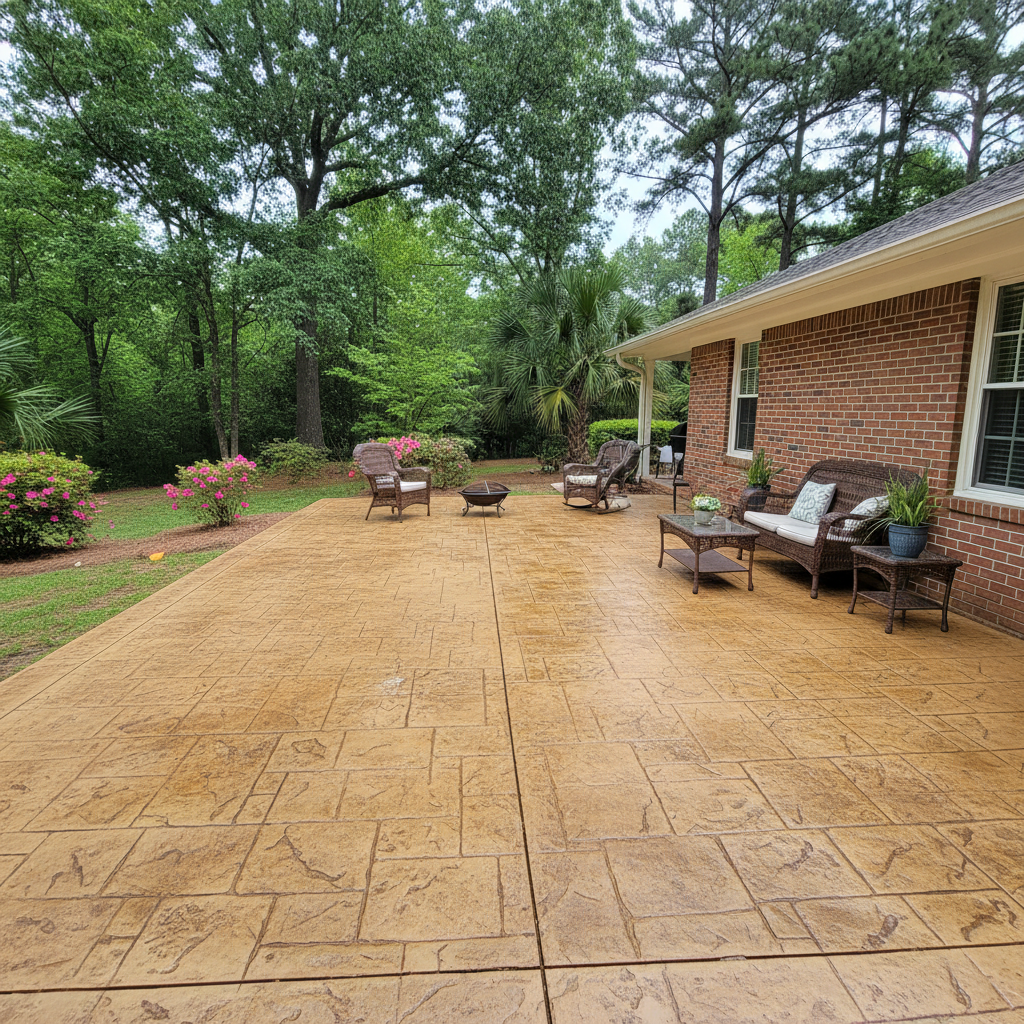
You put money into stamped concrete for good reasons, right? It just looks amazing, really boosts your home's curb appeal, and adds that special touch. But like anything worthwhile, it needs a little care to keep it looking its best. Especially here in Jesup, where our Georgia weather can be pretty tough on outdoor surfaces, keeping up with maintenance isn't just a good idea — it's absolutely necessary.
Making Your Stamped Concrete Last Longer
The main thing for stamped concrete that lasts a long time isn't some big secret: it's just regular sealing. Think of it kind of like sunscreen for your concrete. Georgia's strong sun and UV rays are no joke; they can really fade the beautiful colors in your stamped concrete and break down the sealer much faster than you might expect. That's why I always tell folks around here to reseal their stamped concrete every 2 to 3 years. Some guides, which are usually written for colder places up north, might suggest every 7 years, but honestly, that just won't work with our heat and humidity.
When you reseal, you're doing more than just protecting the color; you're also putting up a barrier against moisture, stains, and the general wear and tear of daily life. This is really important because our frequent rain cycles can seriously test how well your concrete drains. If water gets in, it can erode the sub-base underneath, and that can make any small cracks a whole lot worse. It's a key step, really.
Regular Upkeep: What You Should Do
Keeping your stamped concrete in good shape isn't a full-time job, but it does need some consistent effort. Here's what I usually recommend:
- Keep it Clean: Regularly sweep off loose stuff like leaves, dirt, and small twigs. Don't let that debris sit around and stain your nice surface. A leaf blower works great for this, too. For a deeper clean, a garden hose with a gentle spray is usually all you need. If you've got some stubborn spots, use a mild, pH-neutral detergent with warm water. Just make sure to stay away from harsh chemicals, undiluted vinegar, or those high-pressure washing settings, because those can actually damage the sealer and even the concrete itself.
- Watch for Stains: If you happen to spill something, clean it up quickly. Things like oil, rust, tire marks, or even organic stuff like pollen (and we get a lot of that yellow stuff here in Jesup, don't we?) can leave a stain if they sit for too long.
- Mind the Seasons: In winter, if we happen to get any ice, use plastic shovels for snow removal and try to avoid de-icing salts. Salt can really damage concrete, especially if it's newly cured. Sand or kitty litter are much better options for traction. During our hot summers, if you have areas that get really intense direct sun, maybe consider adding some shade to help prevent color fading.
- Reseal on Schedule: Like I mentioned earlier, every 2-3 years is really the sweet spot for stamped concrete here in Georgia. The best time to get it done is typically in the fall (around September-October). Temperatures are usually moderate then, the humidity is lower, and you're more likely to get a few consecutive dry days without those sudden summer thunderstorms. You want the surface to be totally clean and completely dry before the sealer is applied.
Signs That Something's Wrong
Your stamped concrete will usually give you hints when there's an issue. Keep an eye out for these things:
- Fading Color: If your vibrant patio starts looking dull or washed out, especially in spots with a lot of foot traffic or direct sun, your sealer is probably wearing thin. That's a clear sign.
- Water Soaking In: A good sealer makes water bead up on the surface, like little pearls. If water soaks into the concrete and darkens it instead of beading, it's definitely time to reseal. This is a pretty reliable indicator.
- Surface Flaking or Spalling: This is when small pieces of the concrete surface start to chip or peel off. This can happen if water gets into the concrete and then freezes and thaws (even our mild Georgia winters have a few of those cycles), expanding and damaging the surface.
- Excessive Cracking: While some tiny hairline cracks are normal in concrete, widening cracks, or a lot of new cracks showing up, can point to bigger problems. Georgia's clay-heavy soil expands and contracts with moisture, which puts stress on concrete, so proper installation with control joints is important.
- Mold or Mildew: In our humid climate, mold and mildew can easily grow on concrete that isn't sealed or is poorly sealed. If you spot green or black patches, it's not just unsightly; it means your concrete isn't getting the protection it needs.
When to Bring in a Professional
Look, I'm a contractor, and I know plenty of folks like to do things themselves. For basic cleaning and even resealing, you might be able to handle it. But there are definitely times when you really need to call in someone like me at Top Notch Concrete Solutions.
- Significant Cracks or Damage: If you've got cracks wider than a quarter-inch, or if pieces of concrete are loose or broken, please don't try to patch it yourself with some caulk. We can properly assess the damage, fill cracks the right way, or even resurface areas to stop bigger problems from happening down the road.
- Sealer Issues: If your sealer is peeling, turning cloudy, or just not working like it should, you might have an incompatible product or an application problem. It's usually best to have a pro strip it off and reapply it correctly.
- Drainage Problems: If water is consistently pooling on your stamped concrete, or if you notice erosion around the edges, that's a drainage issue that really needs professional attention. If you leave it unchecked, it will undermine your concrete.
- Major Stains You Can't Remove: If you've tried cleaning and a stain just won't budge, we have specialized products and techniques that can often remove it without damaging the concrete.
- You're Unsure: Honestly, if you're ever in doubt about the condition of your stamped concrete or how to deal with a problem, just give us a call. It's always better to get a professional opinion early on than to let a small issue turn into an expensive repair or even a full replacement. We've seen it all, from the older homes in the historic district with their unique soil conditions to the newer developments on the outskirts of town.
Taking care of your stamped concrete isn't just about making it look nice; it's about protecting the investment you made. A little proactive maintenance really goes a long way in keeping it beautiful and durable for many years to come.