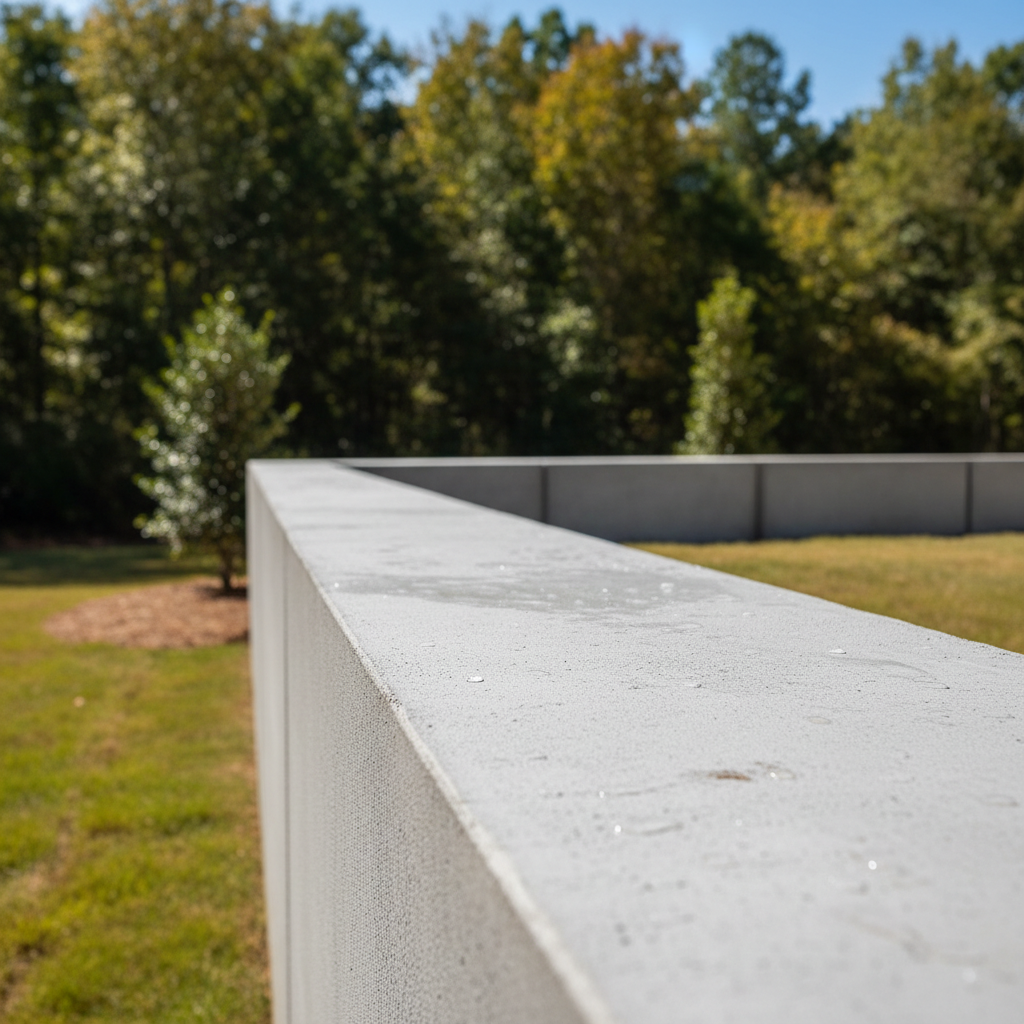
Alright, let's talk retaining walls. I get a lot of questions about these, especially with the way some properties are built around here in Jesup. You've got slopes, drainage issues, maybe you're trying to create a level yard space — a good concrete retaining wall can really change things. But there's a lot to know, and folks often have the same concerns. So, I've put together answers to the questions I hear most often.
Why would I even need a retaining wall?
Most folks think of a retaining wall as just holding back dirt, and that's a big part of it, sure. But it's more than that. If your yard slopes, a retaining wall can stop erosion, which is a real problem with our sandy-loam soil around Jesup. It keeps your topsoil from washing away every time we get a heavy rain. It also turns sloped land into usable, flat space. Maybe you want a patio, a garden bed, or just a level spot for the kids to play where it was once just a hill. A well-built wall makes that possible. Plus, it can help manage water runoff, directing it away from your foundation or other areas where you don't want standing water. Ultimately, it protects your property and makes it work better for you.
What's the difference between a concrete block wall and a poured concrete wall?
This is a big one. When people say 'concrete retaining wall,' they might be thinking of a few different things. A concrete block wall, often called a segmental retaining wall, uses interlocking blocks. These are usually dry-stacked, meaning no mortar, and they rely on their weight and the way they fit together to hold back the soil. They're pretty versatile, come in different colors and textures, and can work well for shorter walls or curves. Poured concrete walls, on the other hand, are exactly what they sound like: we build forms, pour wet concrete into them, and it hardens into one solid, single structure. These are incredibly strong and durable. For taller walls or situations where you need maximum stability, especially with heavy loads or significant soil pressure, poured concrete is usually the way to go. It's a more involved process, but you get unmatched strength and longevity. Top Notch Concrete Solutions handles both, but I'll always recommend what's best for your specific situation.
How tall can a concrete retaining wall be?
The height really depends on a few things: the type of wall, the soil conditions, and what it's holding back. For block walls, you're generally looking at 3 to 4 feet without needing a lot of extra engineering. Go much higher, and you start needing geogrid reinforcement – those are layers of material embedded in the soil behind the blocks to add stability. Poured concrete walls can go much taller, often 6 feet or more, especially when properly engineered with rebar reinforcement and a strong footing. For anything over 4 feet, you'll almost certainly need engineering plans and permits from the city or county. We always follow those regulations to the letter, because safety and structural integrity are just non-negotiable.
Will I need a permit for my retaining wall?
Absolutely, for most of them. In Jesup, if your retaining wall is over 4 feet tall measured from the bottom of the footing to the top of the wall, or if it's supporting a structure or a public right-of-way, you're going to need a permit. Even if it's shorter, if it's part of a larger landscaping project or affects drainage significantly, it might trigger permit requirements. It's not just about getting permission; it's about making sure the wall is designed safely and won't fail, causing damage or injury. We always handle the permit process for our clients, making sure everything is up to code before we even break ground.
How long does a concrete retaining wall last?
A well-built concrete retaining wall, whether it's block or poured, should last a very long time. Poured concrete walls, especially, can easily last 50 to 100 years or even more with good design and installation. Block walls are also very durable, often lasting 30-50 years. The key is proper drainage behind the wall, a solid foundation, and good construction practices. If water builds up behind the wall and can't escape, it puts immense pressure on it, and that's when you see problems. That's why we always include proper drainage systems, like gravel backfill and weep holes or a French drain, to relieve hydrostatic pressure. Without that, even the strongest wall won't last as long as it should, will it?
What about drainage? Is that really important?
Crucial. It's probably the single most important factor for the longevity and stability of any retaining wall. Our heavy Georgia rains mean a lot of water can saturate the soil behind your wall. Saturated soil is much heavier and pushes far harder than dry soil. If that water can't drain away, it builds up hydrostatic pressure, pushing against the wall. This pressure can crack, bow, or even completely collapse a wall over time. That's why we always install a drainage system behind the wall. This typically involves a layer of gravel or crushed stone directly behind the wall, a perforated drain pipe at the base, and often geotextile fabric to keep soil from clogging the drain. It's an extra step, but it's non-negotiable for a wall that's going to stand the test of time.
What's the typical cost for a concrete retaining wall?
This is where it gets tricky because there's no one-size-fits-all answer. The cost depends on several factors: the height and length of the wall, whether it's block or poured concrete, how much digging we need to do, how easy it is to get to the site, soil conditions, and the complexity of the design (curves, steps, etc.). Poured concrete walls tend to be more expensive upfront due to the labor and materials for forming and pouring, but they offer superior strength and longevity. Block walls can be less expensive initially for shorter walls. You're looking at anywhere from $40 to $100+ per square foot of wall face, sometimes more for very complex or tall walls. This usually includes excavation, materials, drainage, and labor. The best thing to do is have us come out, take a look at your property, and give you a detailed, no-obligation quote. That way, you'll know exactly what you're looking at for your specific project.