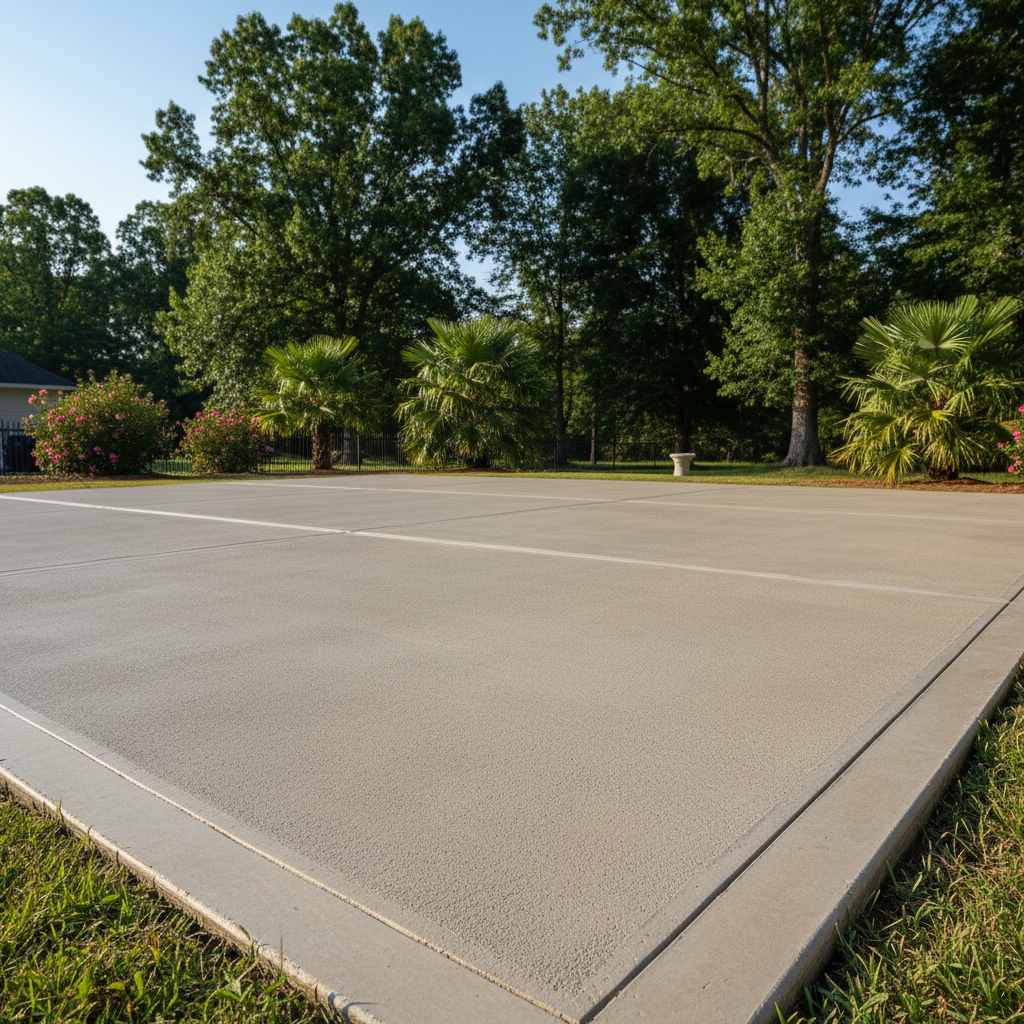
What's the real cost of a concrete patio around here?
Alright, let's get straight to it: cost. This is usually the first thing folks ask me, and it's a fair question. The truth is, there's no one-size-fits-all answer, but I can give you a good idea of what influences it. You're generally looking at anywhere from $5 to $15 per square foot for a basic, broom-finished concrete patio. Now, that range is pretty wide, right? Here's why:
- Size and Shape: Bigger patios, naturally, cost more. But also, complex shapes with lots of curves or angles take more time and specialized forming, which drives up the labor cost. A simple rectangle is always more economical.
- Preparation: If we've got to do a lot of grading, remove old concrete or decking, or bring in a bunch of fill dirt to get the base right, that's going to add to the bill. Good prep is crucial, though; you don't want a patio that cracks or settles because someone cut corners on the foundation.
- Finish and Features: A standard broom finish is the most affordable. But if you want stamped concrete that looks like stone or brick, or exposed aggregate, or maybe some decorative saw cuts, those are all going to increase the price. Stamped concrete, especially, involves more labor and specialized materials. Built-in fire pits, seating walls, or steps also add to the complexity and cost.
- Accessibility: If our equipment can't easily get to the backyard, or we have to hand-carry materials a long way, that's extra time and effort.
The best way to get an accurate quote is to have someone like me come out, take a look at your specific yard, and talk about what you're hoping for. We'll give you a clear breakdown.
How long does it actually take to pour and finish a new patio?
From start to finish, you're usually looking at a few days of active work, but the timeline can stretch depending on a couple of things. Day one is almost always about prep: digging, grading, laying down the base material (like gravel), and setting up the forms. If the ground is already pretty level and clear, this goes quick. If we're dealing with a sloped yard or a lot of existing debris, it'll take longer.
Day two, or sometimes day three depending on the prep, is pour day. That's when the concrete trucks show up, we pour the slab, and then my crew gets to work floating, troweling, and applying whatever finish you've chosen. This is a pretty intense day, and we're often working against the clock before the concrete sets up too much. For stamped concrete, the stamping process itself adds a good chunk of time.
After the pour, it's mostly a waiting game. You can typically walk on it lightly after 24-48 hours, but you'll want to keep any heavy furniture or vehicles off it for at least 7 days, and ideally 28 days for it to reach its full strength. We'll also come back to cut control joints, which are super important for managing where any cracks might occur naturally.
What's the deal with cracks? Are they inevitable?
Look, I'm not gonna lie to you: concrete cracks. It's a natural characteristic of the material. It expands and contracts with temperature changes, and it shrinks a bit as it cures. We do everything we can to minimize them and control where they happen, but you should expect hairline cracks over time. It's just part of having concrete.
What we do to manage this is put in what we call 'control joints.' These are those cuts you see in concrete slabs, usually every 10-15 feet. We cut them deep enough to create a weakened plane in the slab, so if the concrete is going to crack, it'll crack along that line instead of just randomly across your beautiful patio. It's like giving the concrete permission to crack where it won't be as noticeable or cause structural issues.
Proper sub-base preparation and the right concrete mix are also key. A well-compacted base prevents settling, and using the right water-to-cement ratio helps reduce shrinkage. We take all these steps at Top Notch Concrete Solutions to give you the most durable patio possible, but don't be surprised by a few hairline cracks down the road. They're usually nothing to worry about structurally.
How do I keep my patio looking good in this Jesup heat and humidity?
Good question, because our weather here in Jesup can be tough on outdoor surfaces. The sun, the humidity, the occasional torrential downpour – it all takes a toll. Here's what I tell my customers:
- Sealing is your best friend: I can't stress this enough. After your patio has fully cured (usually 28 days), you'll want to apply a good quality concrete sealer. This acts like a protective shield against moisture, UV rays, and stains. You should plan on re-sealing every 2-3 years, maybe more often if it gets heavy use or is exposed to constant sun. It's an easy DIY job, or we can do it for you.
- Clean regularly: Just like any outdoor surface, it's going to get dirty. Sweep off leaves and debris regularly. For general cleaning, a hose and a stiff brush with some mild dish soap usually do the trick. For tougher stains, you can use a concrete cleaner. Avoid harsh chemicals or wire brushes, as they can damage the sealer or the concrete itself.
- Watch out for mildew: With our humidity, mildew can be a real problem. If you see it starting to grow, a solution of equal parts white vinegar and water, or a specialized mildew cleaner, can help. Just make sure to rinse it thoroughly.
- Don't use de-icers: While we don't get much snow here, if you ever had the thought, don't use salt-based de-icers on your concrete. They can cause surface damage.
A little bit of regular care goes a long way in keeping your patio looking sharp for years.
Can I put a concrete patio over my existing wooden deck?
Short answer: No, you really shouldn't. And I mean *really* shouldn't. I get why people ask – it seems like a shortcut, right? But a wooden deck isn't designed to support the immense weight of a concrete slab. Concrete is incredibly heavy, and a deck's joists and footings just aren't built for that kind of load.
Trying to pour concrete over a deck will almost certainly lead to structural failure, cracking, and a whole host of expensive problems down the road. The wood underneath will eventually rot, and the concrete will sag and break apart. You'd end up with a dangerous mess that costs way more to fix than if you'd just done it right the first time.
If you have an old deck and want a concrete patio, the correct approach is to completely remove the existing deck structure. Then, we'd prepare the ground properly, compact the sub-base, and pour a new concrete slab directly on the earth. It's more work upfront, but it's the only way to ensure you get a safe, durable, and long-lasting patio.
What's the difference between concrete and pavers for a patio?
This is a common dilemma, and both have their pros and cons. I work with concrete, so I'm obviously biased, but I'll give you the straight scoop on both.
- Cost: Generally, a basic poured concrete patio is more affordable upfront than a paver patio of the same size. Pavers themselves can be pricey, and the labor involved in laying them individually adds up.
- Durability & Maintenance: Poured concrete, when done right, is incredibly durable and low maintenance. As I said, it'll crack, but those control joints manage it. It's a solid, continuous surface. Pavers are also durable, but the joints between them can allow weeds to grow, and individual pavers can settle or shift over time, leading to uneven spots. You might need to re-sand or re-level pavers periodically.
- Appearance: This is where pavers often shine for some folks. They come in a huge variety of shapes, colors, and patterns, offering a very distinct, often more traditional or intricate look. However, don't underestimate modern concrete! With stamping, staining, and decorative finishes, we can mimic the look of natural stone, brick, or even wood, giving you a custom, high-end appearance that rivals pavers.
- Repair: If a paver gets damaged, you can usually replace just that one. If a section of concrete cracks badly or gets damaged, it's a bigger repair job, though often a patch or resurfacing can fix it.
For a seamless, strong, and customizable surface that holds up great to our coastal Georgia climate, I always lean towards concrete. But it really comes down to your budget, desired look, and long-term maintenance preferences.
Hope this helps clear up some of those questions you might have about getting a new concrete patio. If you're in the Jesup area and thinking about adding some great outdoor living space, give us a call at Top Notch Concrete Solutions. We'd be happy to come out and give you a free estimate and talk through all your options.