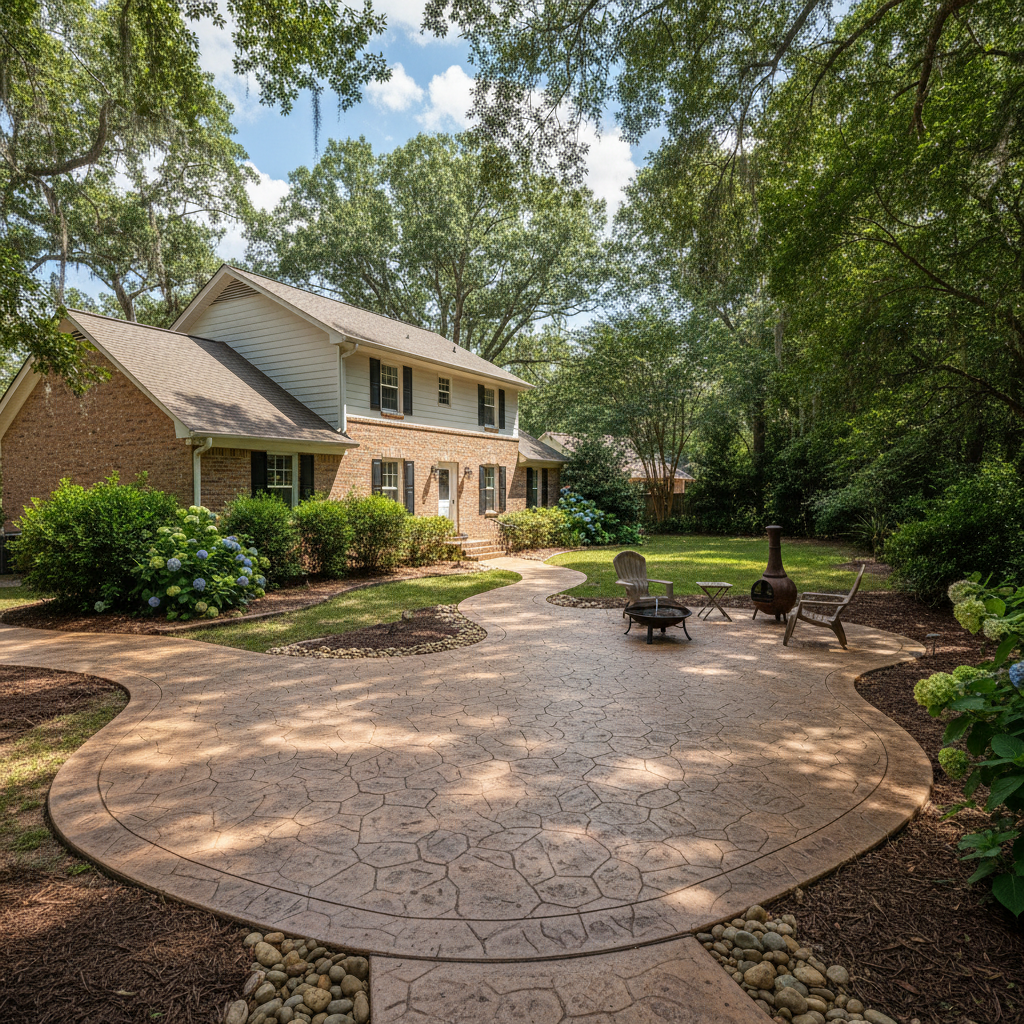
You want your decorative concrete to look good for years, right? Well, getting that done right here in Jesup means understanding our local weather. It's not just about pouring concrete; it's about timing it right and taking care of it once it's in.
When's the Best Time to Schedule Your Decorative Concrete Project?
Look, I've been doing this a long time, and I can tell you that timing is everything, especially with decorative concrete. We're talking about stamped patios, stained driveways, colored walkways – stuff that needs to cure properly to really show off its design and hold up. For us in Jesup, the sweet spot is usually spring and fall. Why?
Spring (March to May): The temperatures are generally mild. We're past the really cold snaps, and the scorching summer heat hasn't kicked in yet. This means the concrete can cure slowly and evenly, which is critical for strength and for decorative finishes like stains or stamps to set correctly. You don't want it drying too fast, do you?
Fall (September to November): Similar to spring, fall gives us those nice, moderate temperatures. The humidity often drops a bit too, which can be a blessing. It's cool enough that the concrete doesn't flash cure, but warm enough that it doesn't freeze before it gets strong. Plus, you get it done before the holidays, ready for family gatherings.
Summer can work, but it's trickier. Those 90-degree days with high humidity? That's a challenge. Concrete can dry too fast, leading to cracking or issues with the finish. We can work around it with special admixtures and careful planning, but it's not ideal. Winter? Forget about it for most decorative work. We rarely get sustained freezing temps, but if it dips below 40 degrees for more than a day or two, it just slows everything down too much and can compromise the final product.
Weather Conditions That Really Matter for Decorative Finishes
It's not just the temperature; a few other weather factors play a huge role in how your decorative concrete turns out.
Temperature: I already hit on this, but it's worth repeating. Too hot, and it dries too fast. Too cold, and it cures too slowly or doesn't gain strength. We're aiming for that Goldilocks zone – just right.
Humidity: High humidity, which we get a lot of around here, can slow down drying times. That's not always bad, as it can help with a slower, stronger cure. But if it's too high, it can affect how sealers or stains go on. Low humidity can speed things up, which can be a problem if it's also hot.
Rain: This one's a no-brainer. You absolutely cannot pour or finish concrete in the rain. It washes out the cement paste, weakens the mix, and ruins any decorative finish. Even a light drizzle can mess things up. We're always watching the forecast like hawks. If rain is coming, we reschedule. Period.
Wind: Believe it or not, wind can be a problem. A strong breeze can accelerate surface drying, even on a mild day. This can lead to plastic shrinkage cracks or make it harder to get a smooth, consistent finish, especially with stamped patterns. We'll often put up windbreaks if we need to.
Protecting Your Decorative Concrete Investment Year-Round
Alright, so you've got your beautiful new stamped patio or stained driveway from Top Notch Concrete Solutions. Now what? You want it to stay that way, right? Here's how to protect it:
Sealing is Key: This is probably the most important thing you can do. We'll put on a high-quality sealer when we finish the job, but it's not a one-and-done deal. Depending on traffic and how much it's exposed to the elements, you'll need to reseal it every 2-3 years. The sealer protects against stains, UV damage, and general wear and tear. It keeps that color looking vibrant and the surface protected.
Clean Regularly: Just like any other surface, decorative concrete needs cleaning. A simple sweep and occasional rinse with a garden hose usually does the trick. For tougher spots, a mild detergent and a soft brush can work. Avoid harsh chemicals or pressure washers set too high, as they can damage the sealer or even the concrete itself.
Watch for Stains: If you spill something like oil, grease, or even leaves that can stain, clean it up quickly. The sealer helps, but it's not invincible. The red clay we have in Jesup can be a real pain if it gets tracked onto a light-colored surface and sits there. Rinse it off before it dries and sets in.
Avoid Heavy Impacts: While concrete is tough, it's not indestructible. Try to avoid dropping heavy, sharp objects on it, especially on stamped patterns. It can chip or crack the surface.
Mind the Freeze/Thaw: Even though our winters aren't brutal, we do get some freeze/thaw cycles. Water can get into tiny pores, freeze, expand, and cause damage. A good sealer helps prevent this by repelling water. Make sure your drainage is good around your concrete, too, so water isn't pooling on it.
Taking a little bit of care goes a long way in making sure your decorative concrete stays a beautiful part of your Jesup home for decades. If you ever have questions about maintenance or if it's time for a reseal, just give us a call at Top Notch Concrete Solutions. We're always here to help you keep your investment looking its best.